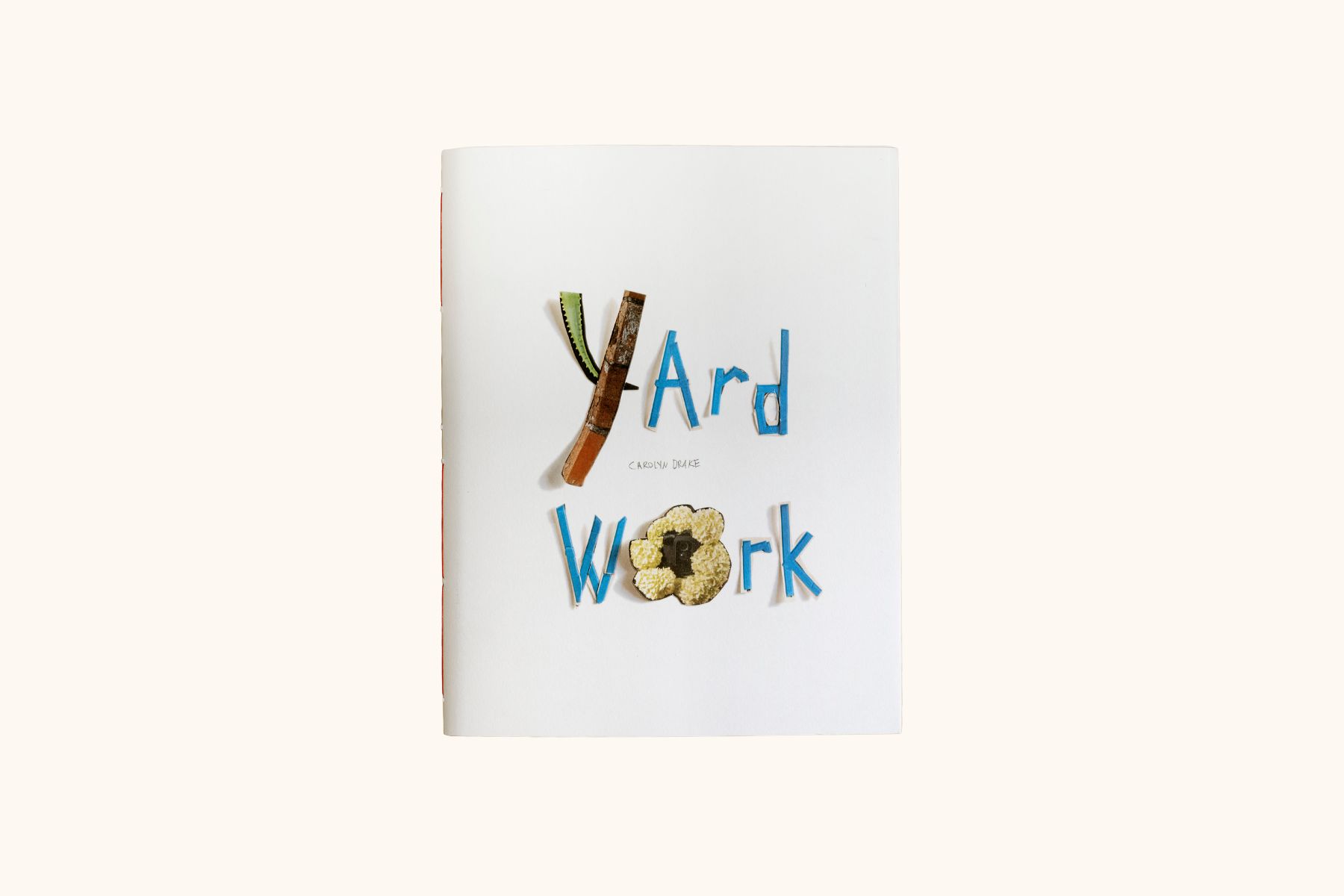
Carolyn Drake is back with a new book, and boy I could not wait to see what she made in and out of lockdown. I’m a big fan, Men Untitled is one of my favourite books ever so I am excited to tell you that she did not only live up to the expectations but exceeded them. She moved back to self-publishing, selling “Yard Work” only via independent book shops. What a legend.
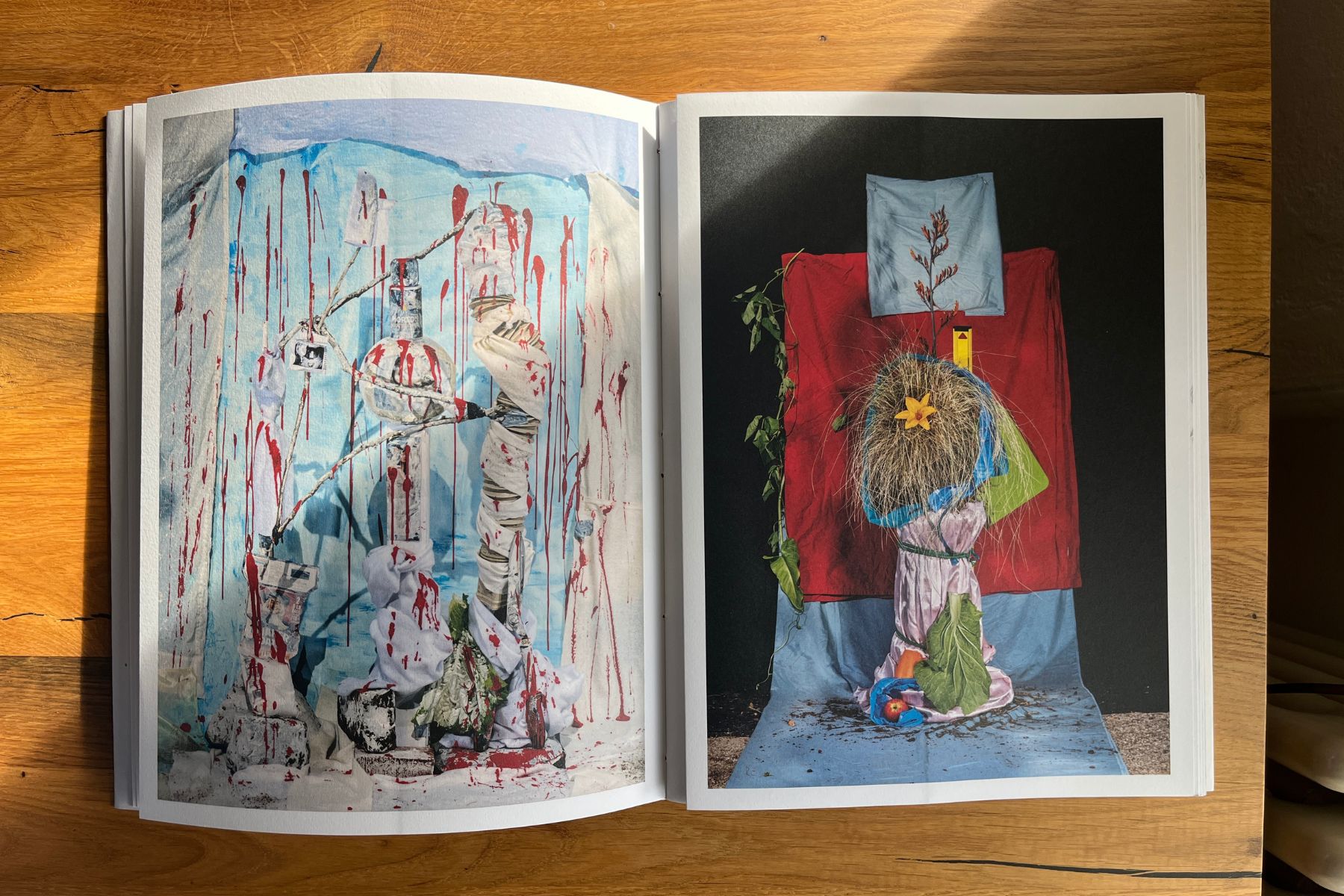
In 2020 Carolyn Drake photographed sculptures made from suburban waste, garden produce and tools all of us will somewhat find in our cupboards, waiting for us to be used to tackle everyday life. Originally, Caroyln says, gardening was a hobby balancing out her life as a photographer, but as lockdown put a pause to most people’s work lives, the boundaries blurred and she started photographing in her back yard. Every morning, as a ritual.
Publisher
Self-published, 2026
Layout
Carolyn Drake & Sybren Kuiper
Size: 234 x 308 mm
Price
$65.00
Link
The book itself is kept quite simple, with big attention to detail. It has a scrapbooky feel: a plain white saddle-stitched softcover with a fold-out cover, which already hints at the little twists we’re about to encounter in the project. After turning the two initial pages, we find the others are folded, revealing pictures of Carolyn herself in her yard, working. Upon a closer look, a game of Where’s Wally? begins, and you realise that within the sculptures there are hidden surveillance cameras. We look at the sculptures Drake created, and then at what the sculptures saw. “[They] became both subjects and witnesses,” she says. Rarely have I looked at a compilation of trash and salad as long and thoroughly as I did in this book.
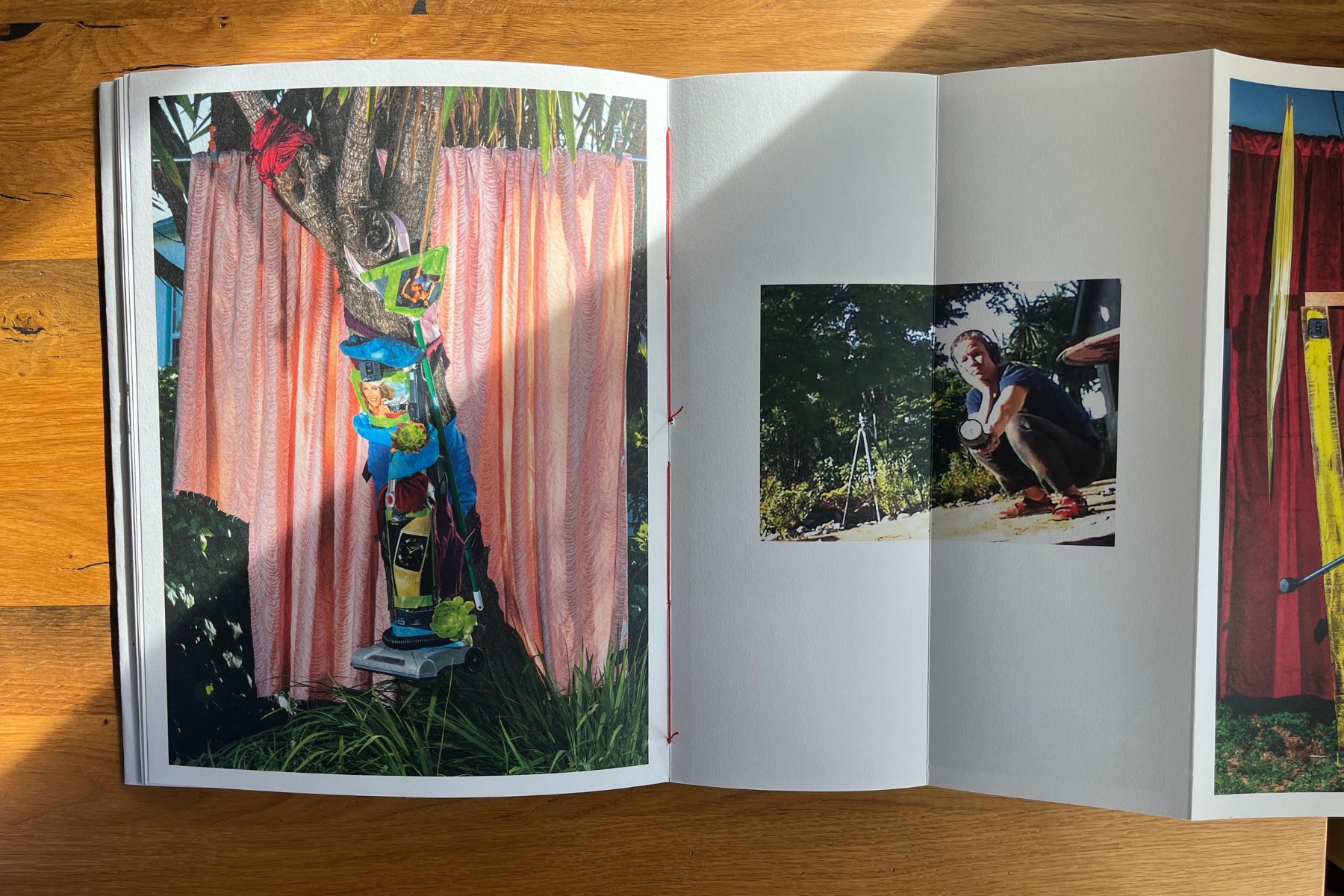
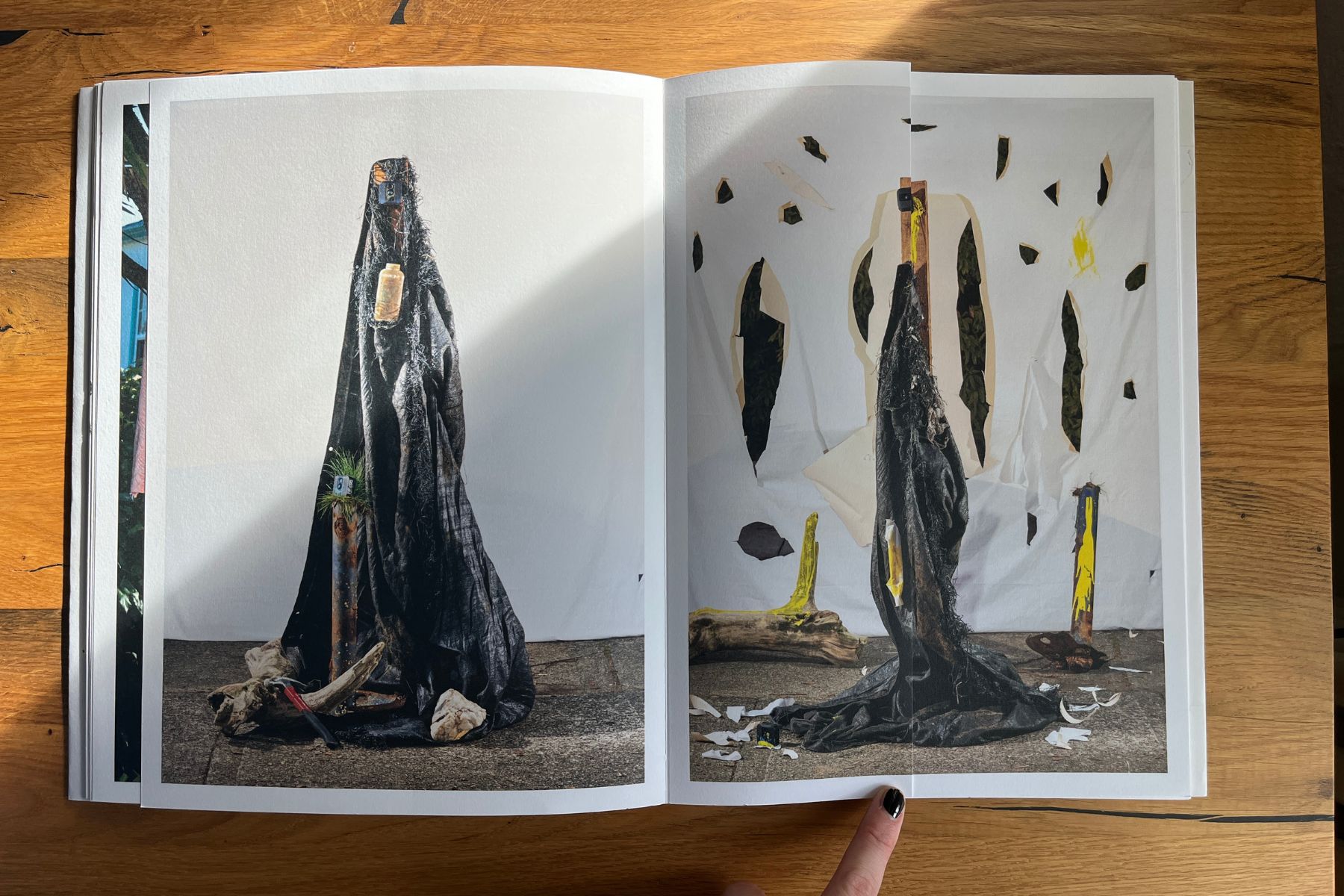
Looking at the sculptures, the images themselves are fairly straightforward: hard flash, almost always shot from the front, at about the same height. The pictures of Carolyn in this perfectly pixelated surveillance camera style. A perfect sequence. What really strikes me is how many emotions I find in these images. First of all, I find the concept and the book are, as expected, very funny and refreshingly unpretentious. You get a peek behind the unglamorous scenes we all encountered, one way or another, while stuck at home during Covid. There’s an immidiate warmth, we feel invited into Carolyn’s life. It’s like showing your friend a silly picture of yourself, which automatically creates intimacy between her and the viewer.
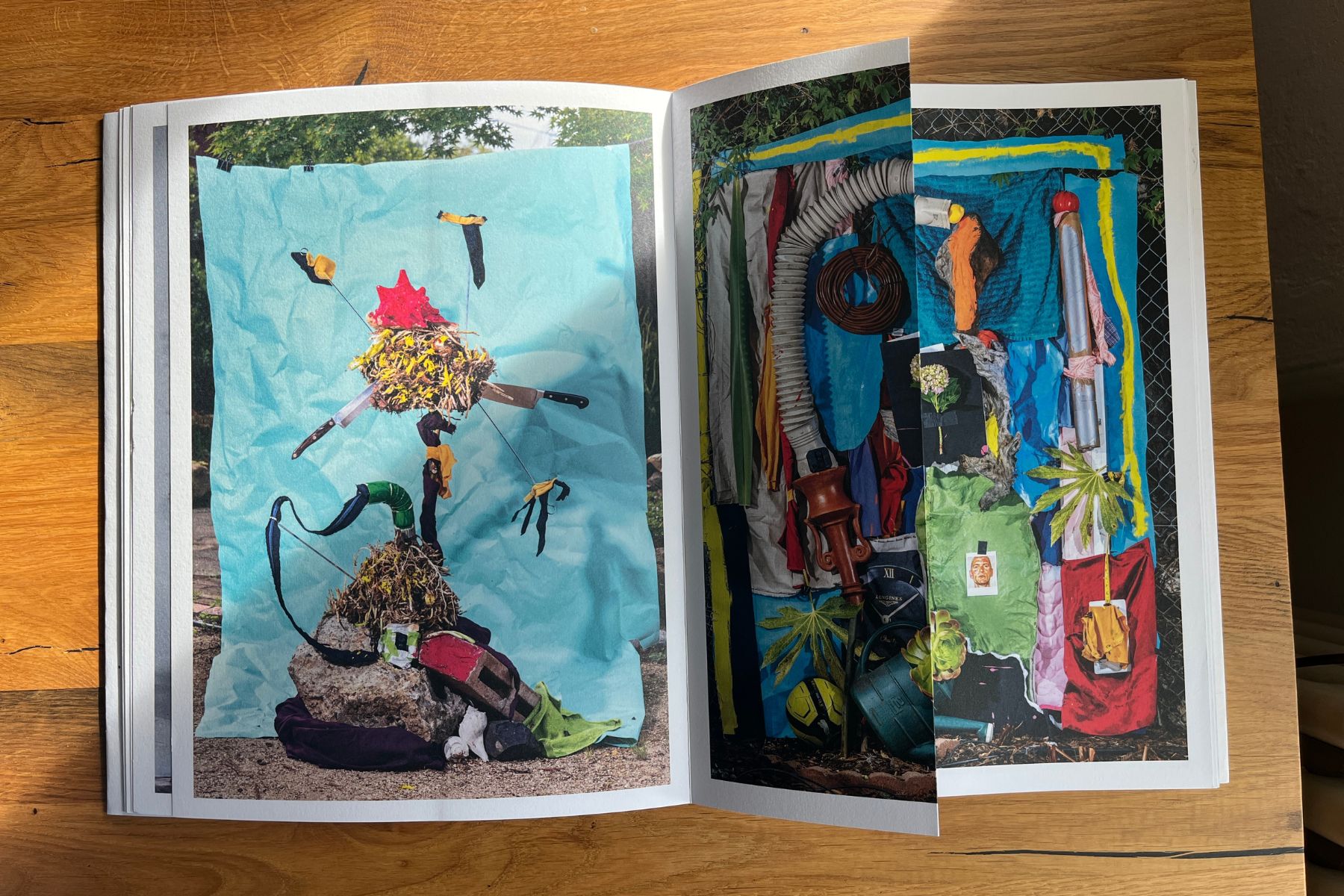
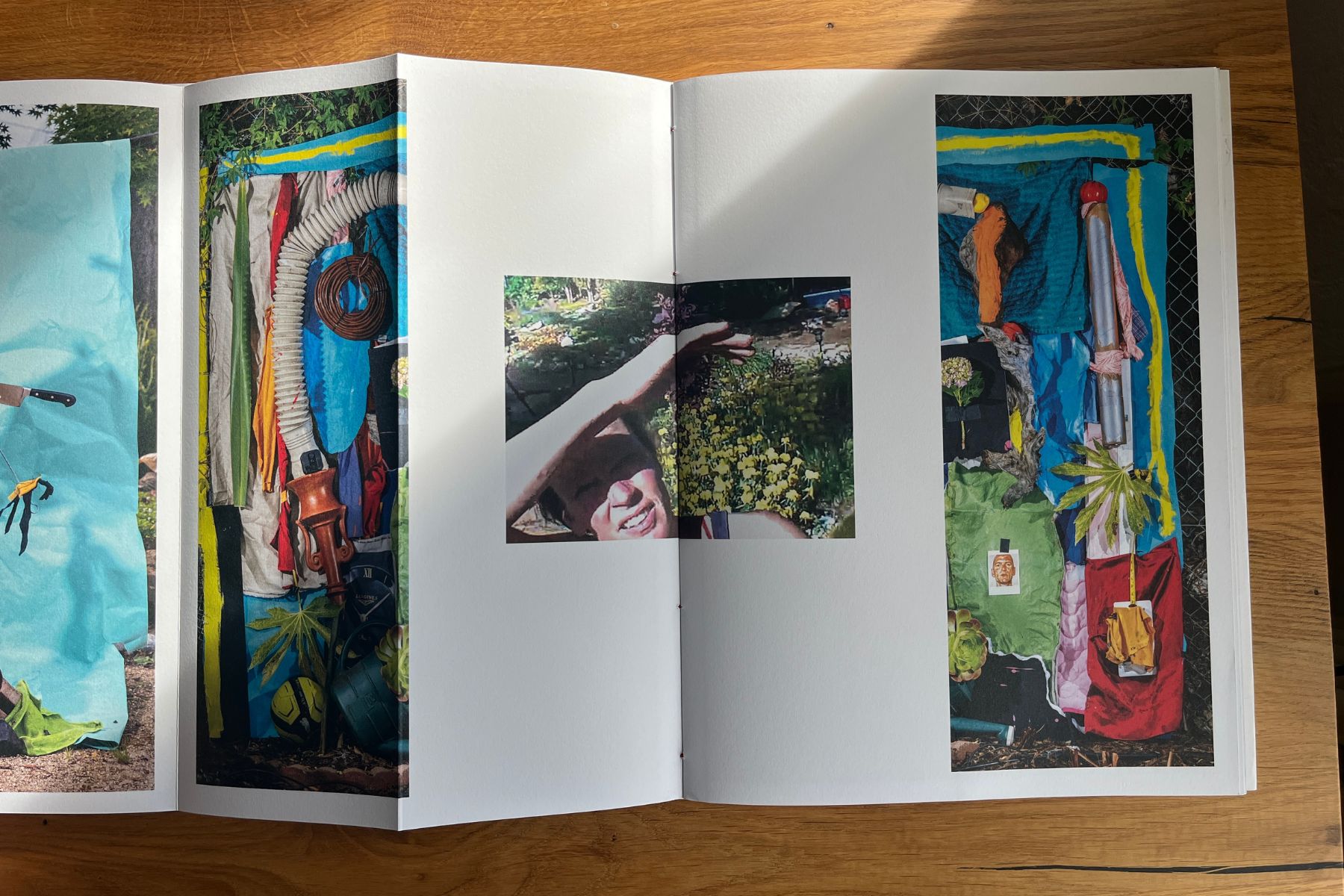
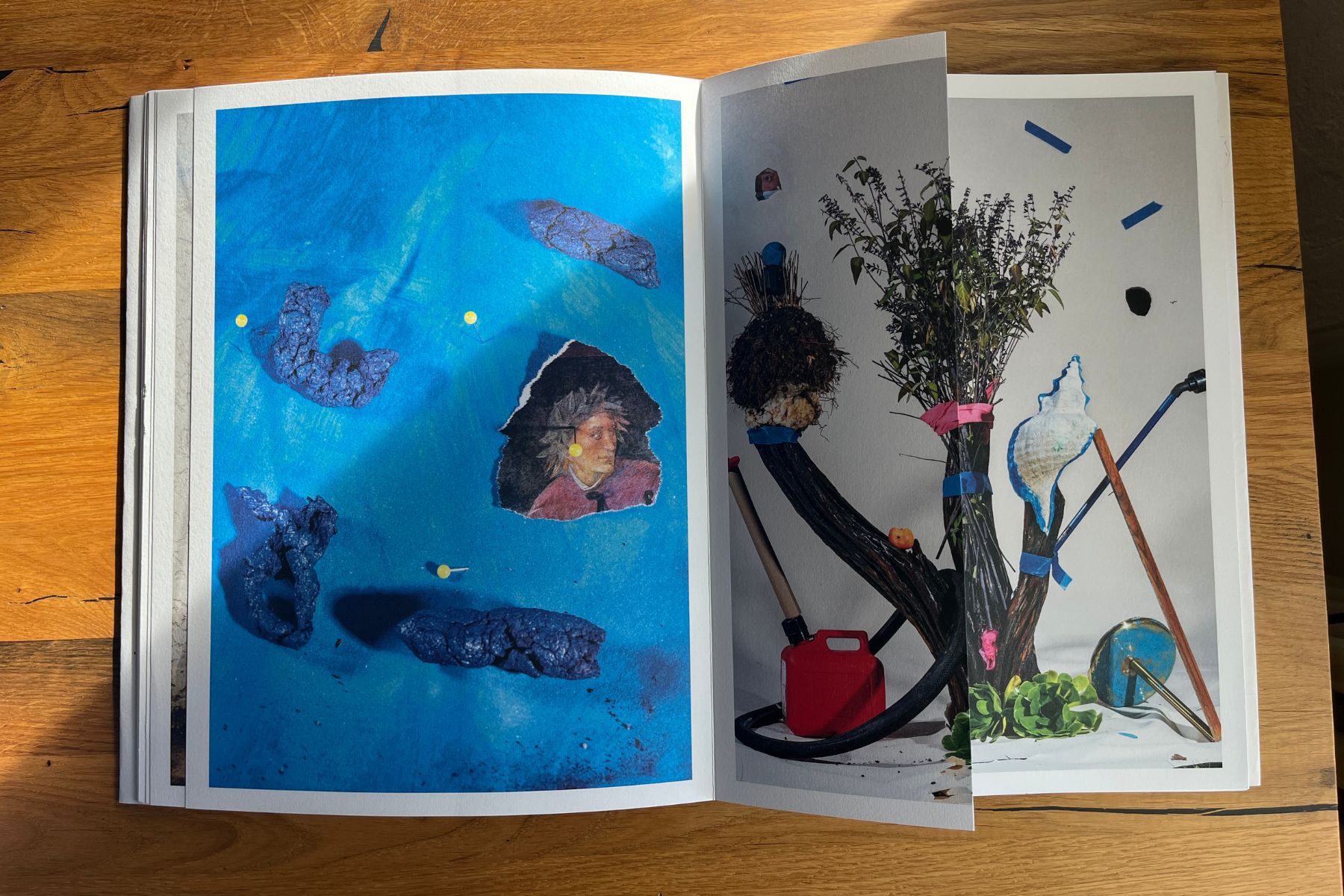
From there, the book moves through a few categories for me. In the beginning I almost see a fight of domesticity: objects strangling each other, the bright, dirty plastic of tubes and hoses, old cloths and tape, knives stabbing some kind of ball of roots. Drake also appropriates old posters and ads, rips them up and sticks them into the constructions. Everything is raw, ripped up and stuck together, the constructions barely holding on, paint splashed, all of it feels urgent. One of my favourite shots is what I think is blue painted poo, with yellow sewing needles and a ripped up painted portrait of a man looking to the side. She states the photos were taken as a kind of ritual, so to me it feels like reading a lockdown diary, where we can really see the battle of being home every day. It’s also a little bit like looking at a crime scene.
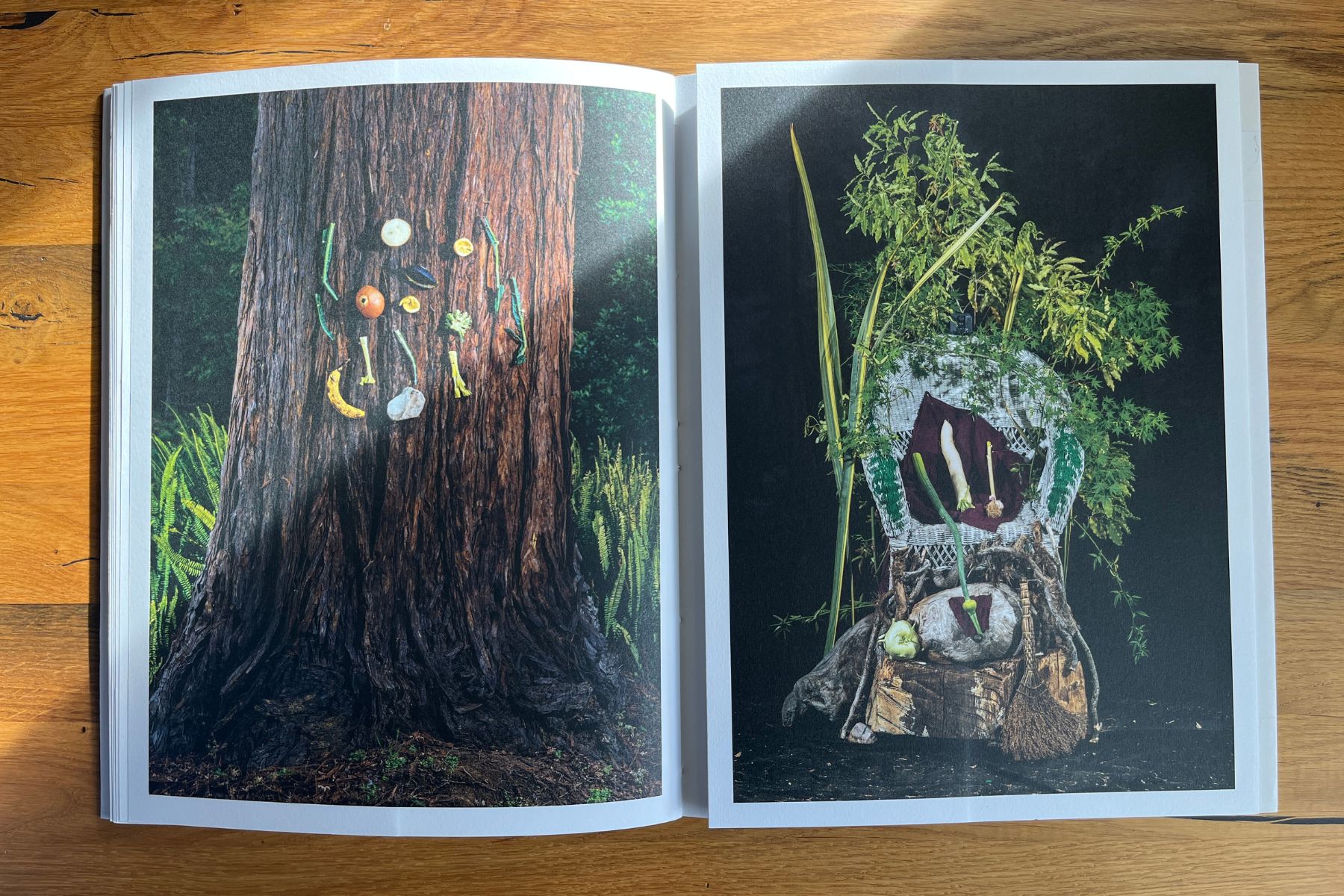
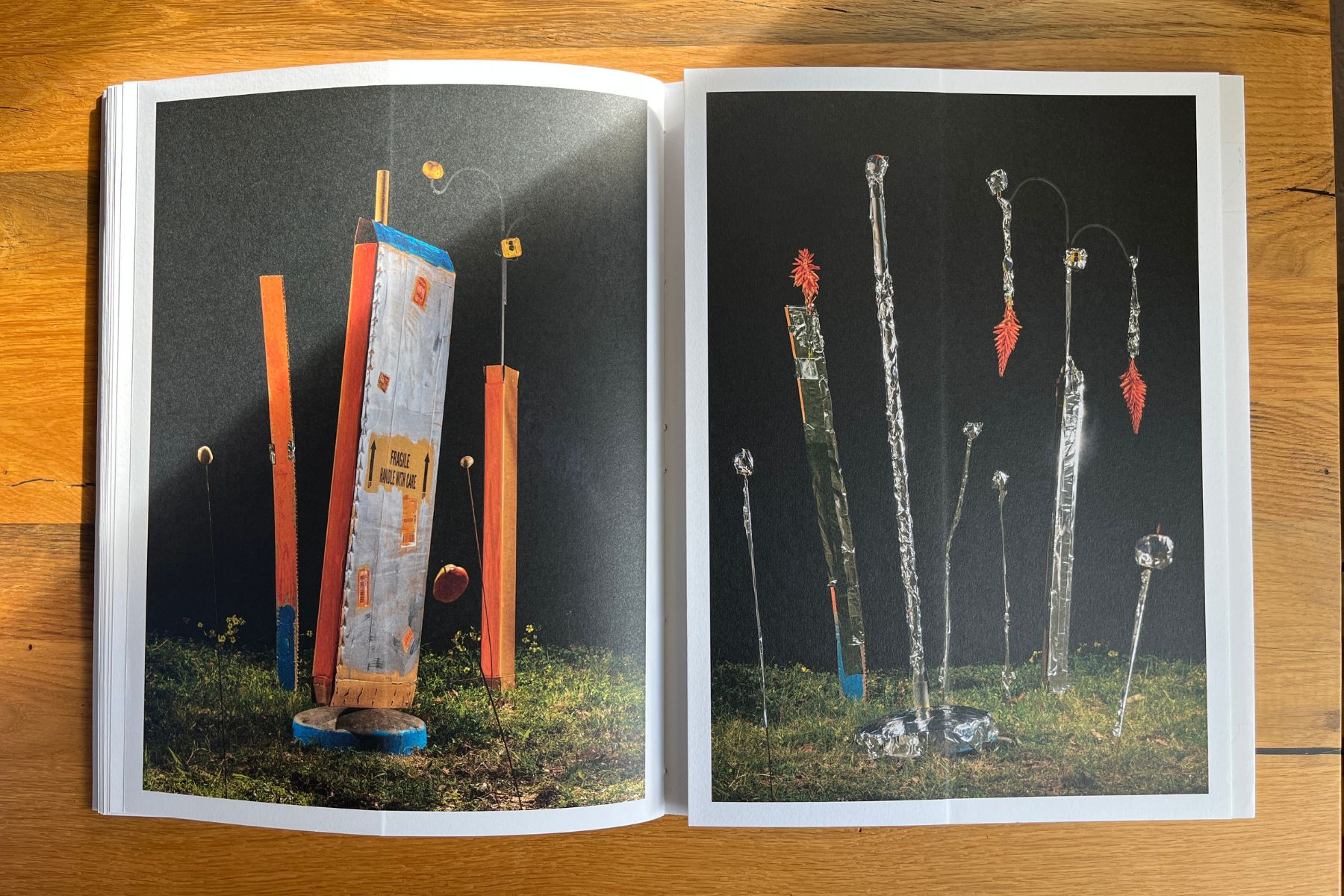
The further into the book we move, the more the mood changes. The lighter, brighter colours give way to dark backgrounds and more dramatic lighting, and suddenly everything seems a bit more mythical and religious to me, like ecclesiastical or liturgical art. The objects shift too, towards garden produce, vegetables and natural materials: altars made of turnips and branches, frames built that draw attention to specific parts in the images, like details of moss. It feels like I’m witnessing the search for meaning through these constructions, the need for an alternate religion to make sense of all the mess that’s gone on during that time. I love the tin foil sculpture, maybe because it reminds me of constructions of UFO enthusiasts trying to attract alien life? (I rewatched a lot of Weird Weekend Episodes during lockdown.)
Through all of this we get to watch Carolyn, in weird, unflattering poses, being surveilled by what she created. The book ends with an essay from the perspective of the sculptures, watching Carolyn go about lockdown, aware of the weirdness of watching and being watched at every step and mentioning the political happenings of the time. It reads like a voiceover for the book. She has humanised her “demons”, her thoughts and feelings from this period, and now tackles them head on, confronting herself and collecting evidence that we’re still here, making this work and keeping this going, at a time where being watched is a bigger part of our lives than ever.
Okay, now for recommendations. Please please check out Carolyn’s book Men Untitled if you can, it is truly exceptional. Moving to a more niche area, I do enjoy photographers humanising the domestic and some great examples for this are the Kitchen Frenzy series by Anna and Bernhardt Blume and the wonderfully weird book Henry Rox Revue. Fotografie 1935–1955 edited by Wolfgang Vollmer.