
Your First Portfolio – The Most Important Step Into the Business
Putting together a strong portfolio is a challenge even for experienced professionals. If you’re an emerging photographer fresh out of university or training, it can feel like an enormous hurdle.
Should you show a broad range of work to prove how versatile you are? Or should you narrow things down to just a few series so your profile feels clearer?
This is exactly where many young photographers get stuck: they mix individual images from completely different areas and genres. Instead of a clear thread, the result is a random collection of work. To potential clients, that can feel confusing and unprofessional, and your actual talent gets lost in the mix.
A good portfolio is much more than a collection of beautiful images. It’s your first calling card in the professional photography business. It’s your invitation to agencies, editorial teams and clients to get to know you and your work.
Your portfolio should make three things clear:
- This is my style.
- This is what I’m interested in.
- This is what you can hire me for.
Portfolio Reviews – Your Chance to Get Honest Feedback
Recent portfolio review sessions have shown just how valuable these meetings can be. You get to meet art producers, photo editors or gallerists, people who know exactly what they are looking for.
The sessions are highly sought after because, in a short amount of time, usually around 20 minutes, you can get valuable feedback on your portfolio, your image selection and your positioning.
Many emerging photographers who are just starting out as freelancers make use of these opportunities. Alongside questions about finding clients or positioning themselves, one topic comes up again and again:
How do I put together my first portfolio?
And this is where a major gap becomes obvious. At university or during professional training, there is often very little guidance on this. Hardly anyone explains which images belong in an application portfolio for an assistant position or how to structure an online portfolio for an editorial client.
Yet these questions can make a real difference when you’re starting your freelance career.
The Most Common Mistakes and How to Avoid Them
In conversations with young photographers, one thing becomes clear: many find it difficult to judge their own work objectively. They lack the distance needed to make a strong selection. Instead of a clear direction, they end up with loose collections of individual images. The images may be visually appealing, but there is no clear concept. Series are often left out because people assume that showing range is more important than showing depth. The result is a portfolio that doesn’t leave a lasting impression.
Even if you don’t have many references yet, you can still build a strong portfolio:
Show series instead of individual images.
Clients want to see how you develop a story and carry an idea through.
Focus on just a few themes.
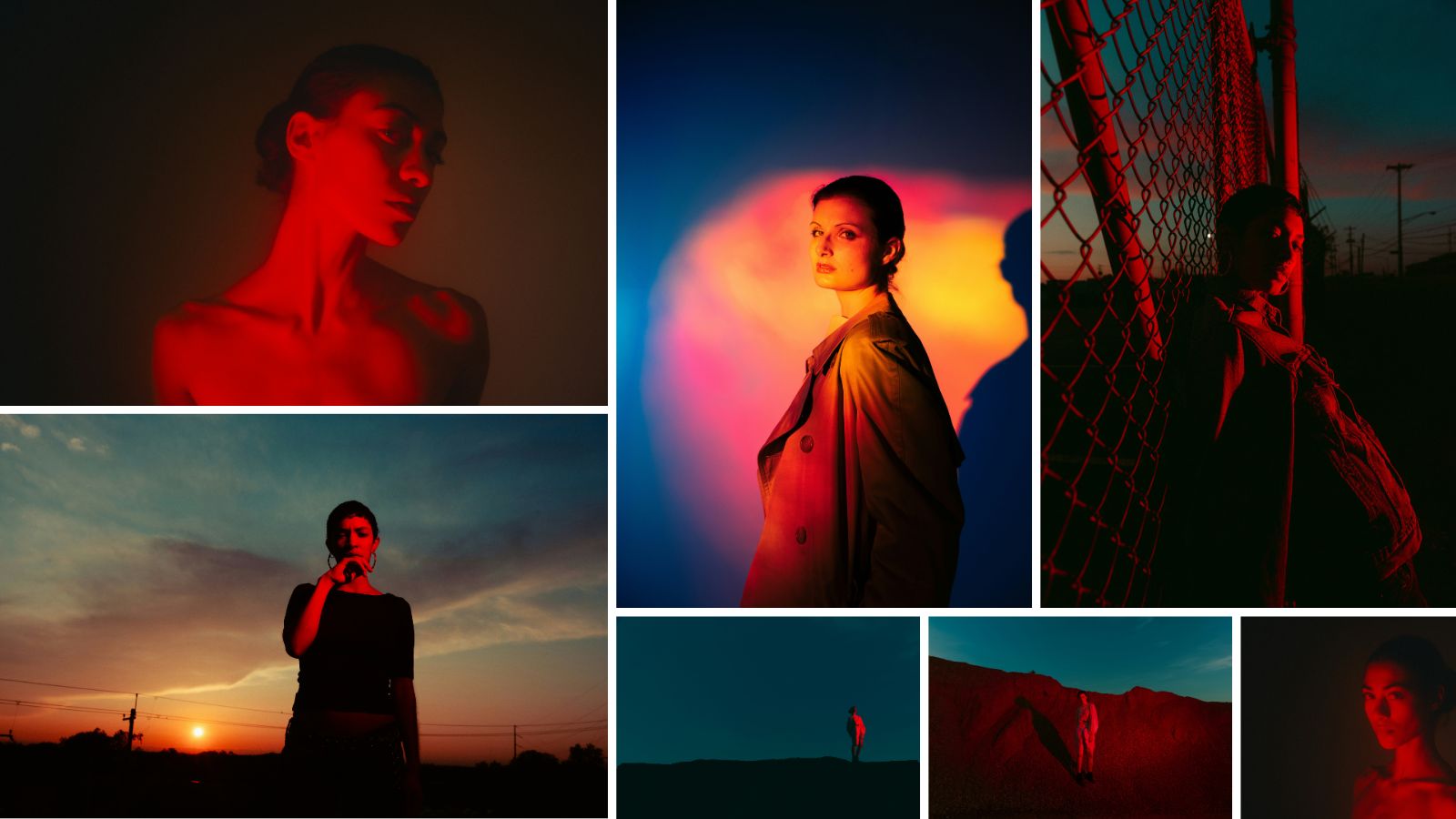
Three series with four to eight images each are stronger than twenty unrelated photographs.
Think about your target audience.
Do you want to work with editorial teams? Advertising agencies? Or do you want to focus on personal projects? Shape your portfolio accordingly.
Create a narrative arc.
Start with a strong, current project, arrange your images deliberately and finish with another memorable highlight.
Show your personality.
Clients know you are at the beginning of your career. They are not expecting perfection. They are looking for authenticity, potential and a point of view.
Your Portfolio as a Door Opener
In the end, your first portfolio is more than something you simply have to put together. It’s your statement to the industry. It can determine whether a client or art director finds your work interesting enough to want to see more. So approach it strategically. Keep your image selection focused and strong, and keep asking yourself:
What does my portfolio say about me as a photographer?
Even if you have less work to show than an established professional, you can still make an impression through concept, storytelling and attitude. Own the fact that you are an emerging photographer and use it to your advantage. Openness and a clear personal perspective are often much more interesting than an overloaded portfolio that tries to show everything and ends up saying nothing. Your first portfolio is your first statement. Make it strong. Make it clear. Show them who you are.
Recap
- Your first portfolio: Your portfolio is your most important calling card in the photography business.
- Show photography projects: Focus on small series of four to eight images instead of unrelated single shots.
- Portfolio structure: Create a clear thread and avoid a chaotic mix of images.
- Speak to your target audience: Tailor your image selection to the clients you want to work with.
- Portfolio flow: Start with your strongest project and end on a high note.
- Show your portfolio: Attend portfolio reviews and get feedback from industry experts.