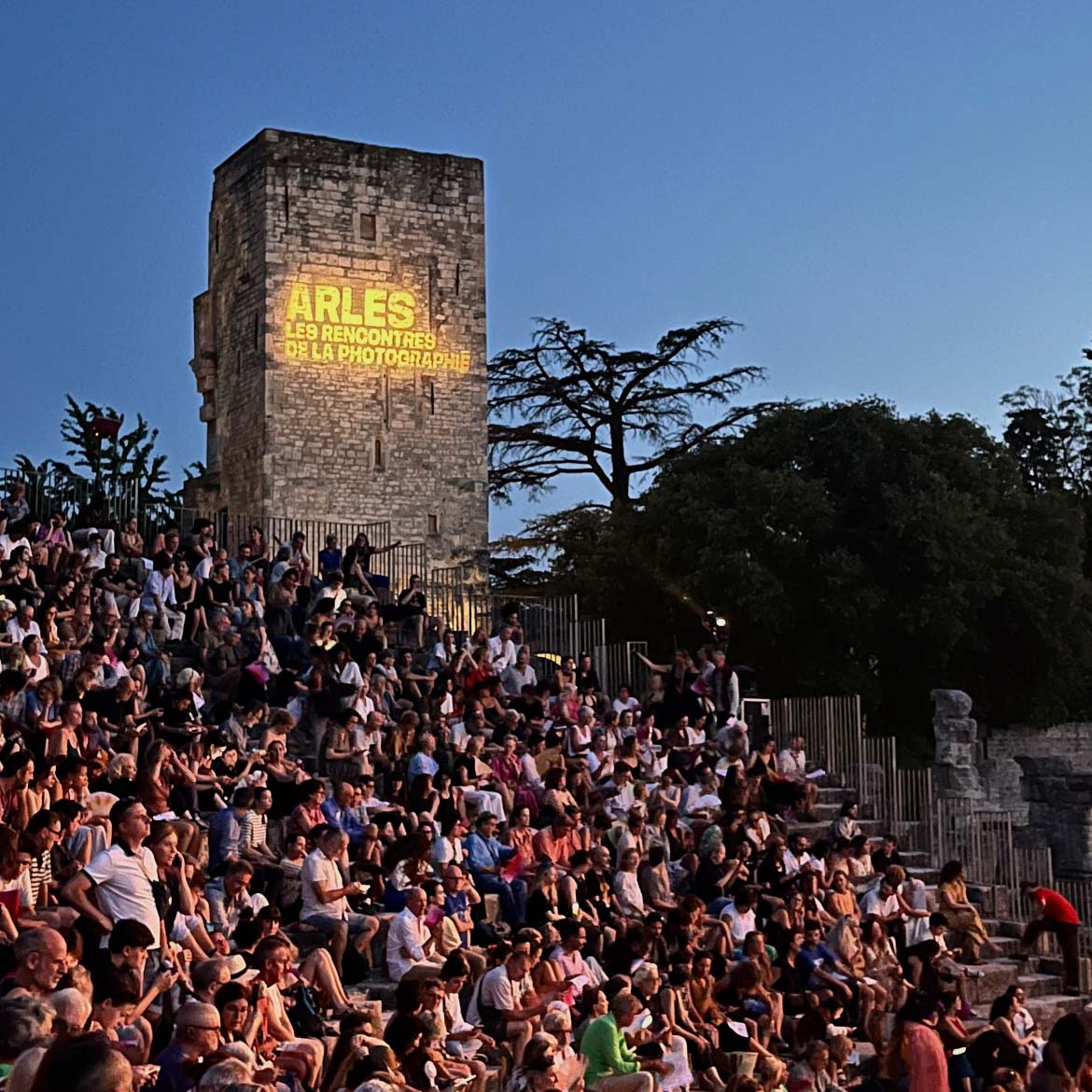
The 57th edition of the Rencontres d’Arles turned its attention on narratives from across Africa and the Mediterranean this year. Over five days we made our way through the town’s churches, warehouses and cloisters, adding a detour to LUMA’s current shows and a stop at the OFF Arles headquarters at La Kabine, plus the book fair. In between: good food, good company, photo fortune telling, and more ice cream and rosé than is probably wise to admit. The weather turned out to be a blessing in disguise — too overwhelming to linger outdoors, it gave us the excuse to actually slow down and look properly at the work on the walls.
There was, as always probably, an overwhelming amount of good work on show, so what follows is a personal shortlist from me to you rather than anything close to exhaustive. So here are the exhibitions that stayed with me most.
Standout group exhibitions
The strongest group shows this year were the ones that, for me, struck a balance between humour and education, without feeling too distant but instead accessible for even a less experienced everyday viewer.
We Are Not Alone – Alien Images
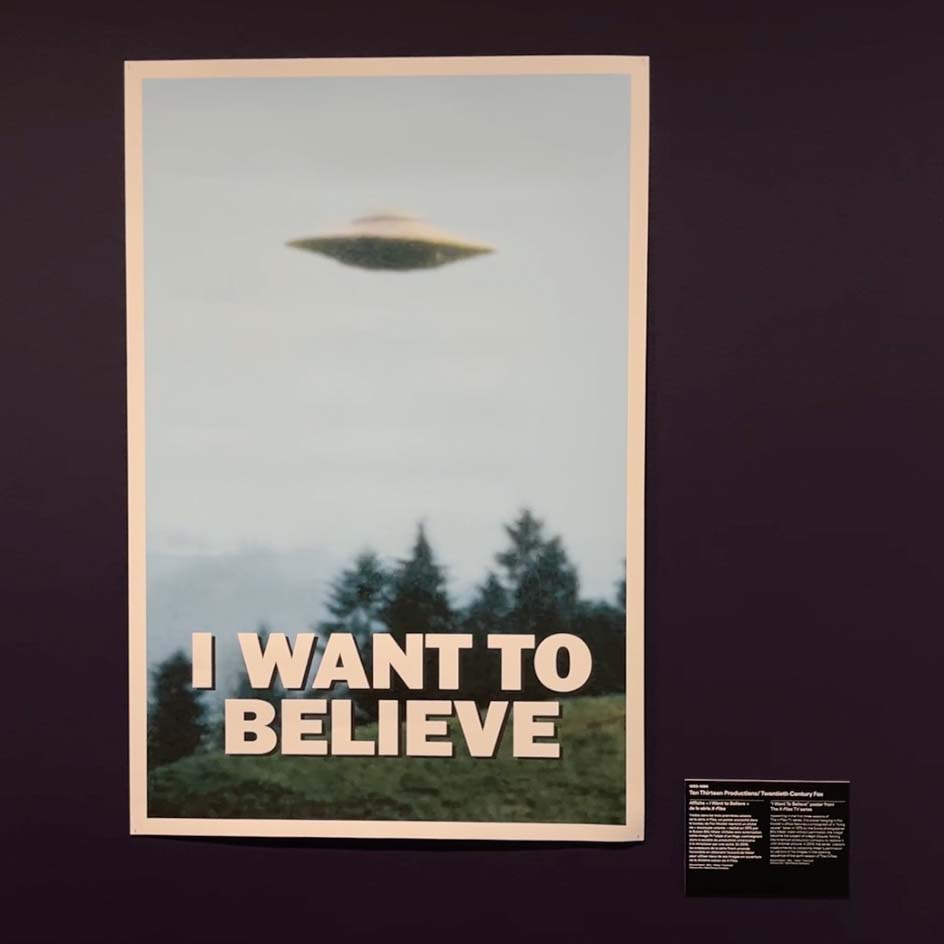
One of the strongest group shows of the festival — especially if, like me, you have a soft spot for The X-Files. Around a dozen photographers and archives are brought together here, from private collectors to institutions like NASA, and the show treats pseudo-scientific UFO research, amateur snapshots and archival newspaper clippings with exactly the same seriousness as fine art photography. The design is accessible without being dumbed down: large, eye-catching prints do the heavy lifting, but there’s also room for smaller, quieter details — family photos, archival curiosities and even video work tucked in alongside the spectacle.
The exhibition takes its cue from a 1975 photograph by Swiss author Billy Meier, whose claimed evidence of extraterrestrial contact quietly inspired the poster art for The X-Files. From there, the show widens into a broader survey of UFO and UAP imagery, tracing how these blurry, ambiguous pictures have unsettled our trust in photographic evidence since the late nineteenth century — long before anyone worried about deepfakes. Drawing on archival documents alongside contemporary artworks, the show explores how sightings generate their own visual folklore, where invented and real imagery blur into one another almost by design.
Animal Model: 200 Years of Photography
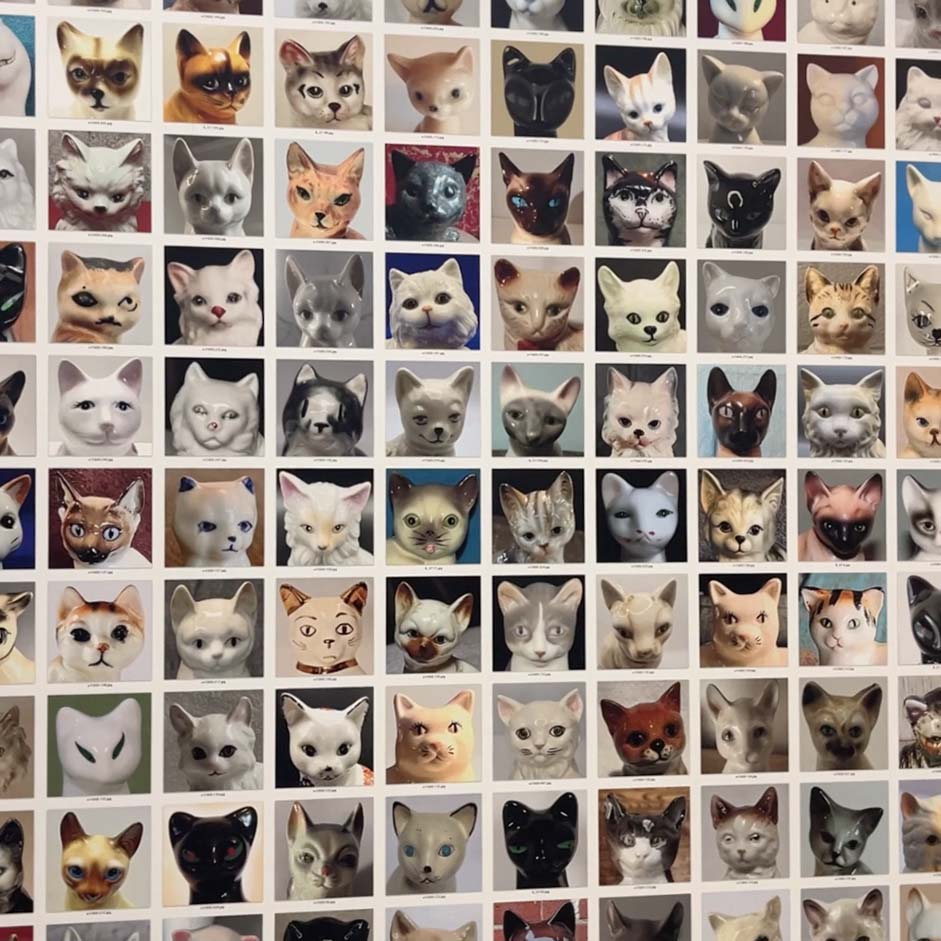
A genuinely interesting selection spanning the conservative and the classic through to the contemporary — there’s even a wall of cat memes. What makes it work is how accessible it is: I went with someone who has no prior interest in fine art photography and there was still plenty for them to engage with. It functions as a solid entry point into the medium’s history while still holding conceptual weight, and it succeeds at what it sets out to do — teaching through entertainment without feeling too much like a lecture.
The show traces two centuries of animal photography through seven different lenses: the anatomical, the performative, the emotional, the fascinated, the ethical, the aesthetic and the viral. It moves from nineteenth-century microphotography through to the playful and the experimental, mixing celebrated names — among them Stephen Gill, Martin Parr and Masahisa Fukase — with anonymous images, and closes by looking at how animals now circulate endlessly across social media. Taken together, the works chart how photography has shaped, and continues to reshape, the way we look at animals — as companions, symbols, subjects of study, or simply memes.
One thing I felt was missing: Yana Wernicke’s Companions, published by Loose Joints, would have fit right in. Well worth seeking out separately if this is your kind of thing.
Regarding this year's theme
Thato Toeba – Anyone Can Be Lucifer
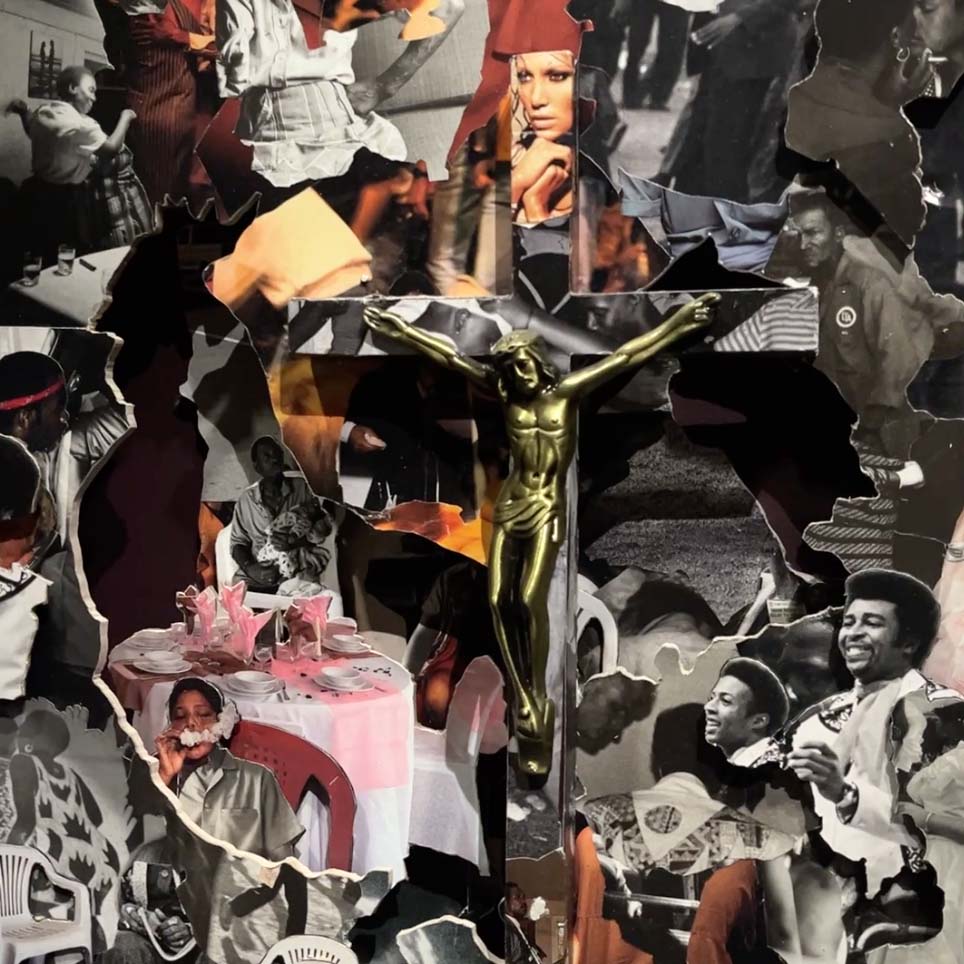
A small, cold, dark room tucked away in the middle of Arles — and honestly a relief to find, since the intimacy of the space made it much easier to slow down and actually spend time with the work. This is a show that questions the photographic medium itself, working through photosculpture and collage rather than straightforward prints.
Toeba, born in Maseru, Lesotho, and trained as a lawyer in Berlin, works with colonial-era archives from Southern Africa, focusing in particular on the lingering imprint of the British Empire on South Africa. Toeba builds on a lineage of collage and photomontage that stretches back to the Dadaists and Surrealists, who used cut-and-paste techniques to construct alternative realities and push back against dominant ideologies. Working with personal photographs alongside newspaper and magazine fragments, Toeba constructs layered three-dimensional pieces using mirrors, glass, board and wood. The results are fractured and layered, using negative space and reflection as much as the images themselves to build compositions that are as much about absence as presence and invite the viewer to engage with the work not just mentally but physically.
Orianne Ciantar Olive – Circular Ruins
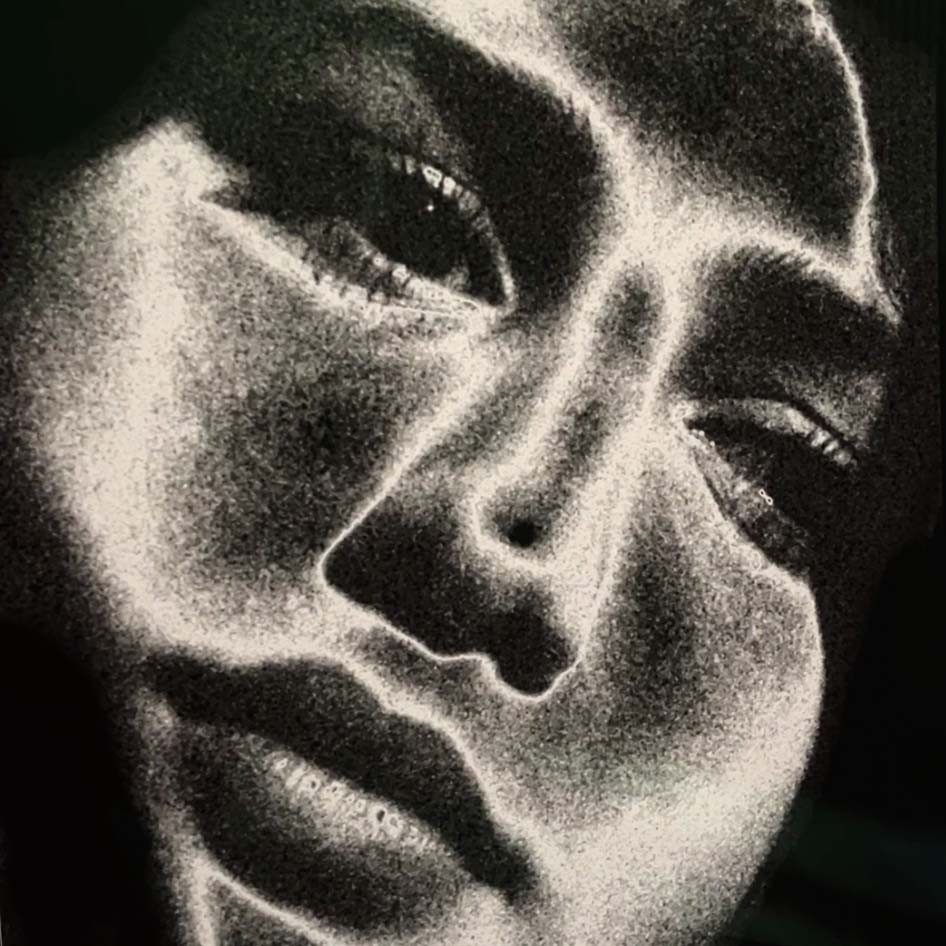
What struck me most was how genuinely inventive the approach to photographing war was: conceptual and poetic rather than plainly documentary in the usual sense, sitting somewhere between reportage and speculation. It’s paired with a beautiful photobook published by Dunes Editions, which is worth tracking down on its own.
In 2019 Orianne Ciantar Olive set out to retrace the former Beirut–Damascus railway line into Syria, but never made it across the border. Instead she rerouted south, tracing the conflict back toward the separation wall at Kfar Kila. The work inverts as it goes: Lebanon becomes an anagram, cardinal directions are flipped, and the film itself is exposed in reverse, so that light passes through the raw material rather than registering on its emulsion. Solarised colour, false names and inverted maps carry that disorientation through the whole piece, which is structured as a spiral circling back on itself, echoing Borges’ short story of the same title.
Special mentions
At the Edge of Worlds - La Kabine
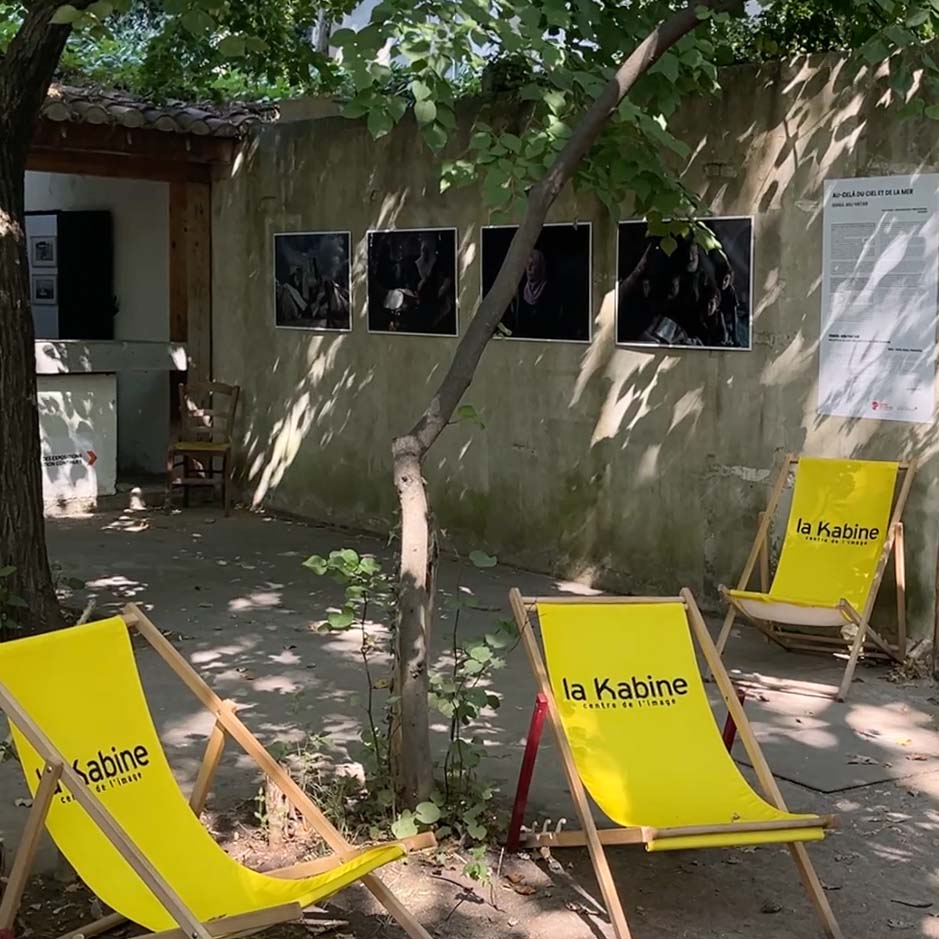
Worth a stop if you’re doing the OFF Arles circuit — some of the best, more classic photojournalism I’ve seen at the festival this year. This programme brings together eight photographic and documentary projects looking at places under pressure — from the shrinking Caspian Sea to scorched Californian landscapes, from Gaza’s coastline to sacred villages in Burkina Faso. It’s a survey of what it means to live somewhere that is disappearing, burning, drying out, or becoming a war zone, and how memory and resistance take shape in response.
Correspondences — Soundwalk Collective and Patti Smith (LUMA)
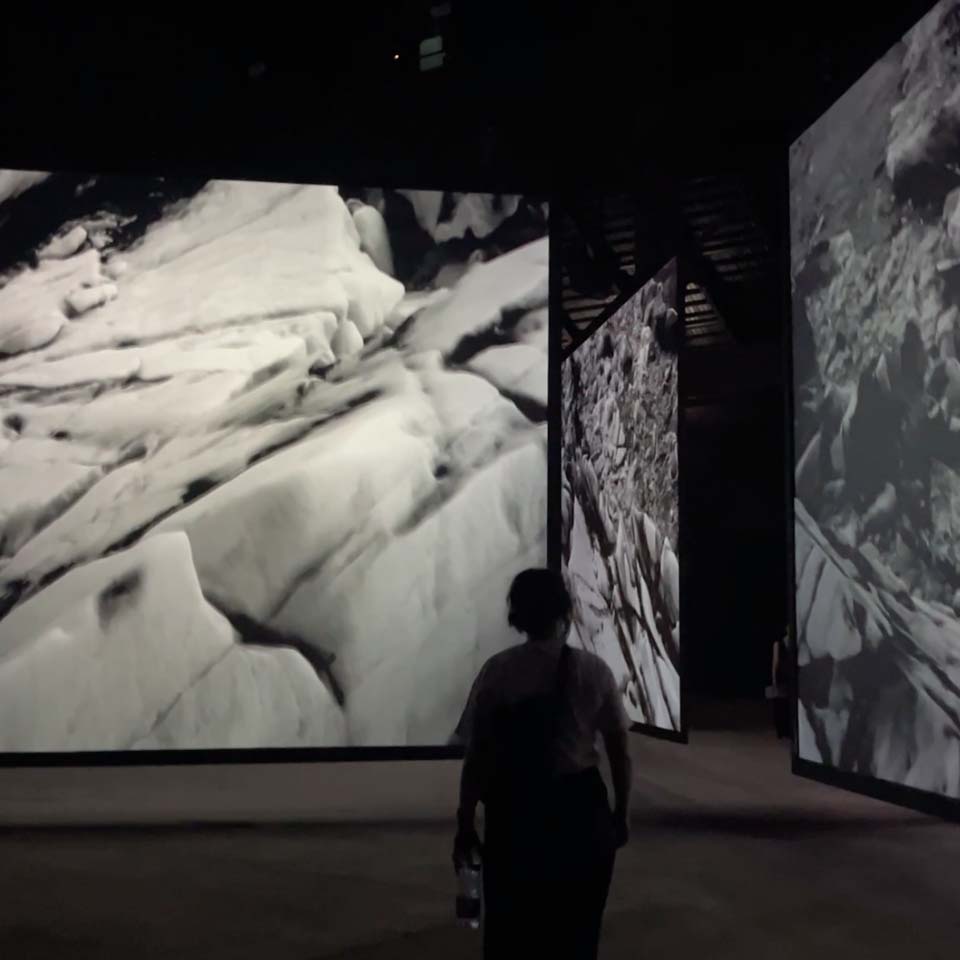
LUMA gets its own mention here too. Impressive, all-consuming, large in scale and genuinely magical — this is a show that pulls you in and doesn’t let go. This immersive (I usually dislike this word but here it genuinely applies) installation is the first major European presentation of the ongoing collaboration between Soundwalk Collective and Patti Smith, combining sound, film and poetry built from over a decade of conversation between the two.
Two newly commissioned works focus on the Camargue, and the exhibition pairs films in dialogue with one another, using fragmentation to open up new associations between them rather than presenting a single fixed narrative. Sound is as central as image here — field recordings gathered from glaciers, deserts, wetlands and contaminated sites sit alongside archival footage and Patti Smith’s voice, which moves between different registers and personas throughout. The installation is less a single artwork than an evolving archive: prints, sound compositions and film sit side by side, inviting visitors to construct their own route through the material rather than follow a set path.
I’m writing this now sat in an ICE recovering from the lack of sleep and sunburn, highly encouraging you to make the trip to France this year if you can fit it in your calendar. The 57th Rencontres d’Arles runs through October 4, 2026, with exhibitions spread across the town’s historic venues alongside the LUMA Foundation as well as the OFF Arles programme which you should definitely not miss.