Photobook Reviews, Episode 17 – by Kate Schultze
This one is not only a heavy one in weight, but a heavy one in subject matter. Brace yourselves, sit with it. My biggest regret is not putting it in the 2025 favourites because it deserved no.1 by miles off. A little trigger warning before we get into it, if you end up getting this book, as you should, there are violent images and images of dead bodies. So if this is not your thing, maybe sit this one out.
Publisher
Éditions Images Vevey
Layout
17.5 x 25 cm, 800 pages, designed by Nicolas Polli
Price
55 CHF
Link
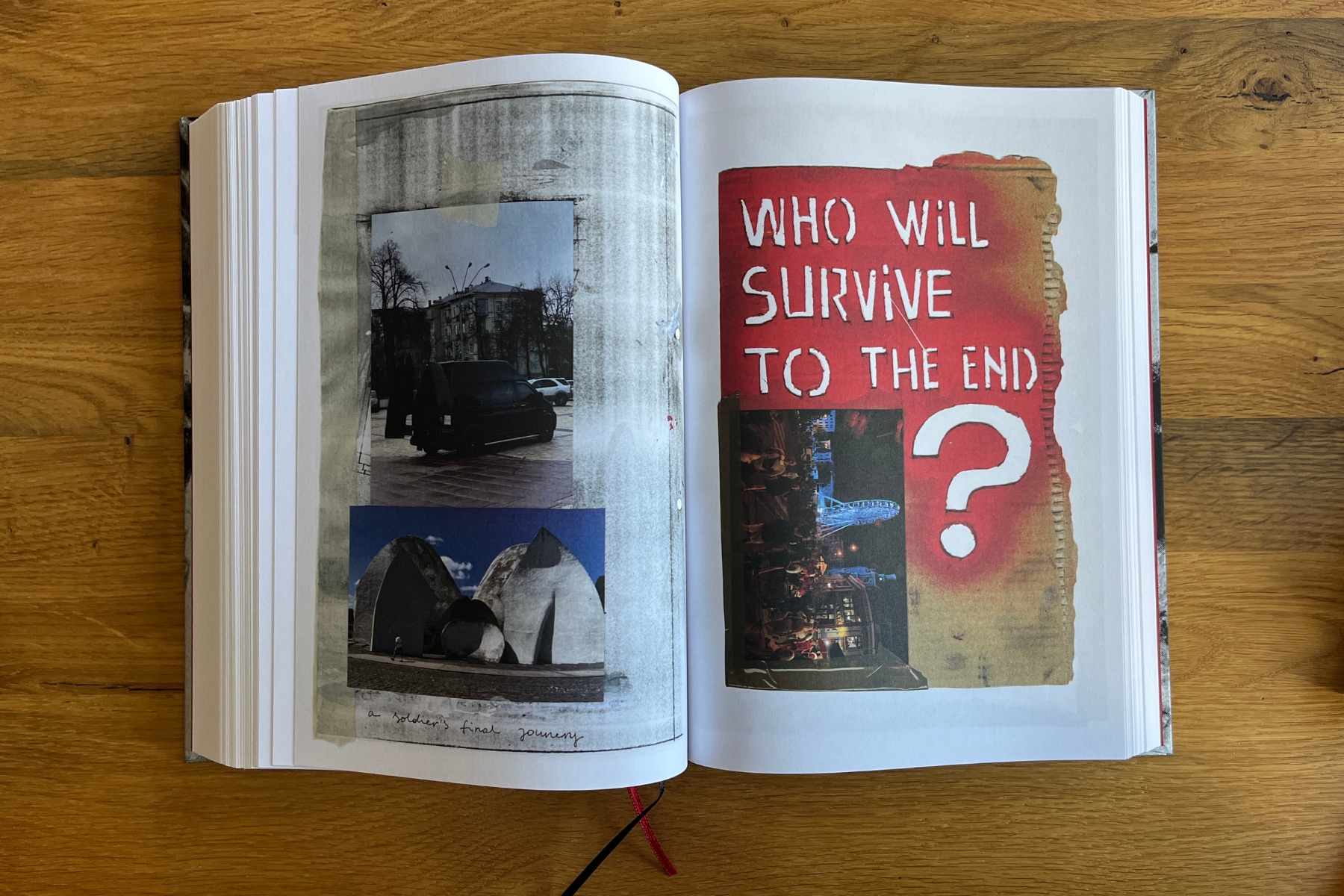
On 24 February 2022, Sasha Kurmaz was in Kyiv when Russia launched its full-scale invasion of Ukraine. The project that came out of this was not a conventional photobook. Red Horse is the record of a life lived under the weight of that fact — over 800 pages built from whatever was at hand, photographed and assembled with the blunt, unflinching logic of an evidence file. The book looks like exactly that: large, dense, shot flat and clean. There is no styling, no atmospheric lighting in the way the collages are reproduced. Pages of old packaging, scraps pulled from rubble, handwritten notes and collages are presented straight-on, matter-of-fact. The design is almost aggressively simple. And yet the cumulative effect is overwhelming.
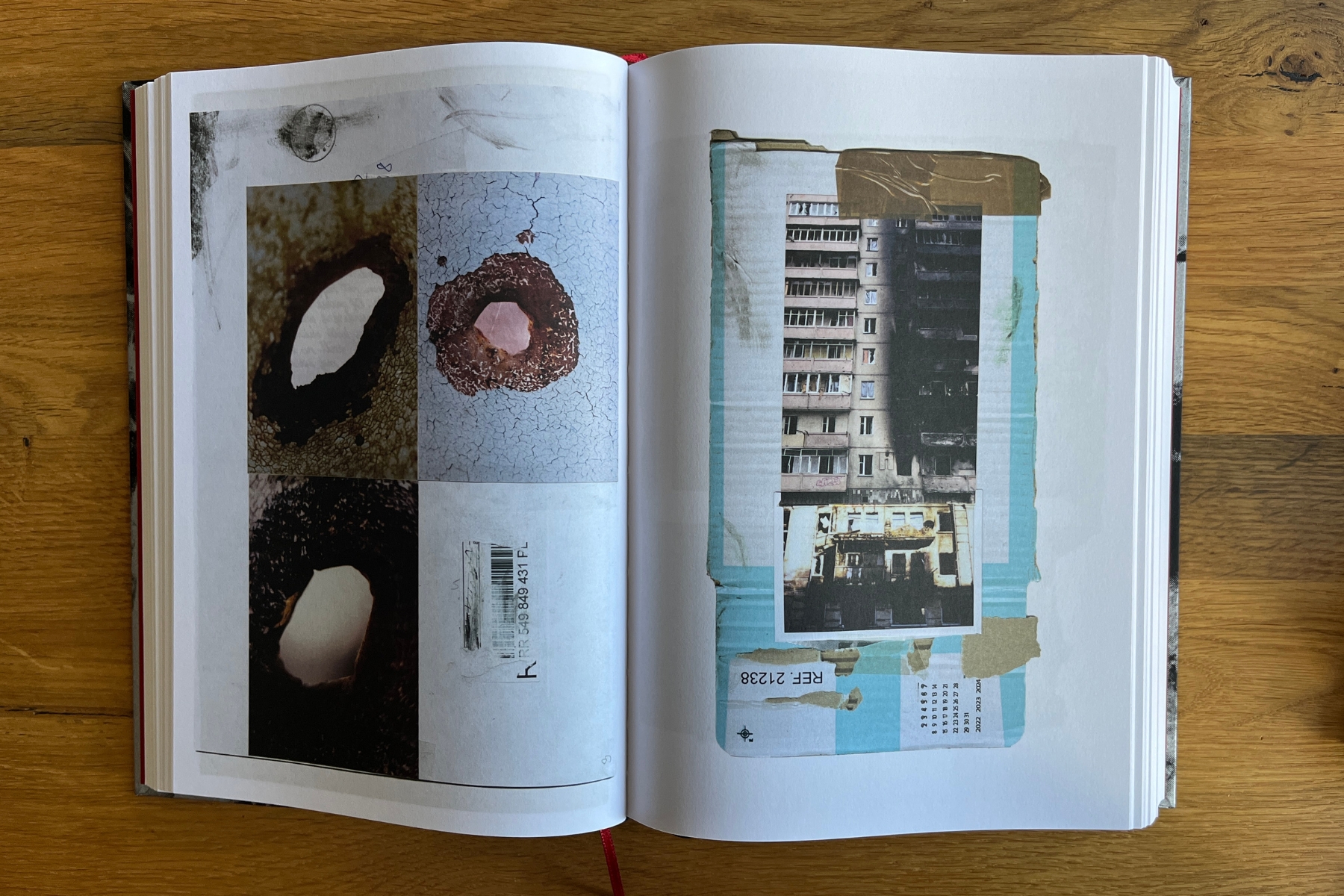
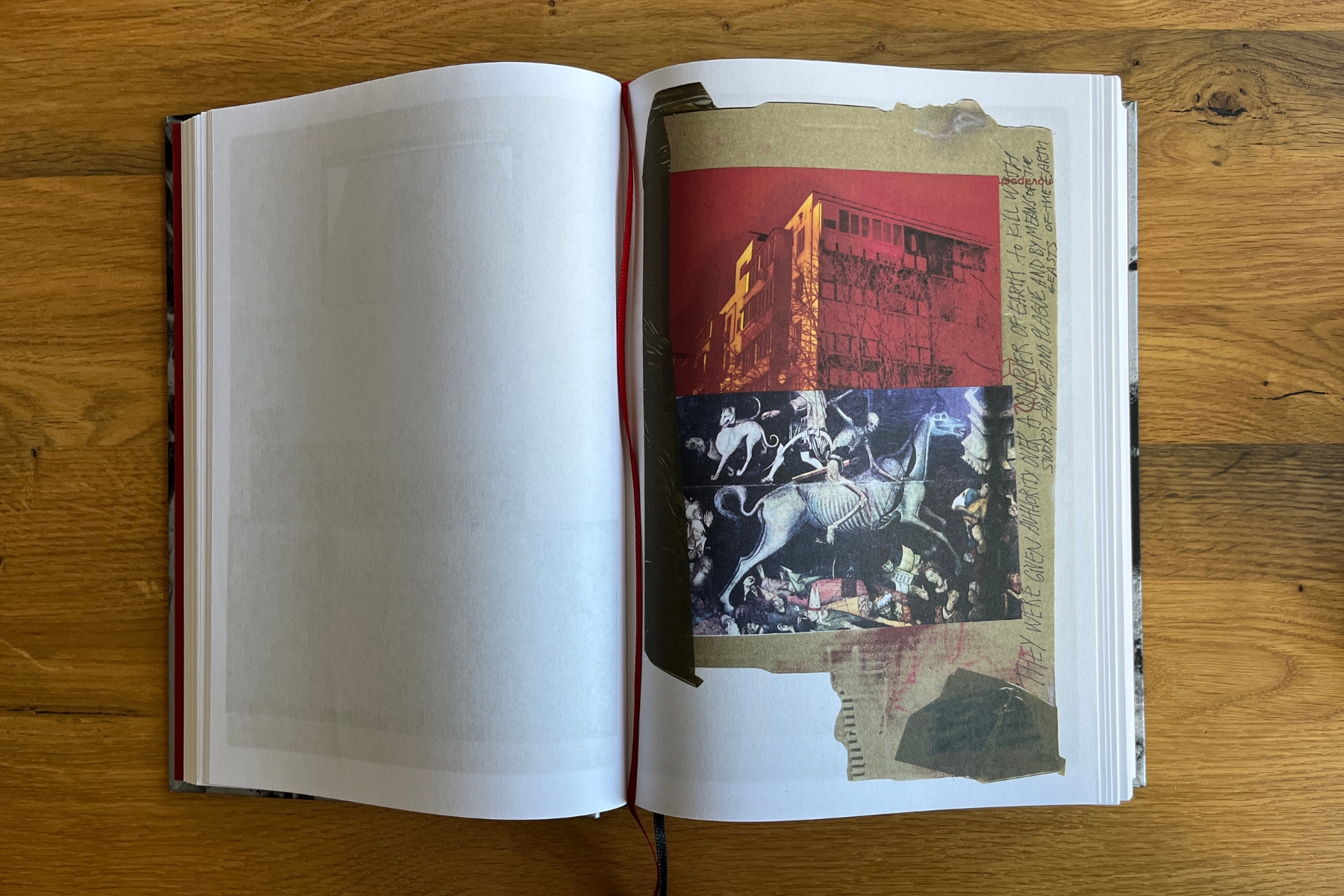
Kurmaz does not photograph the fighting itself. Instead he documents its aftermath, its traces — everyday objects that would otherwise go unseen, placed alongside police-style documentation, archival comparisons, newspaper excerpts, going as far as even incorporating dead soldiers’ phone photos taken in their last moments of life. The effect is this of a forensic log. The political position is explicit and unwavering: questions of the connection between nationalism and resistance run as a constant thread, alongside an unflinching look at how the outside world observes and consumes the war. Kurmaz includes pictures from his travels abroad, the figure of the “war tourist” in Ukraine also appears. The book runs as a timeline from February 2022 to late April 2025, with blank pages and notebook ends acting as chapter breaks, the passage of time made physical.
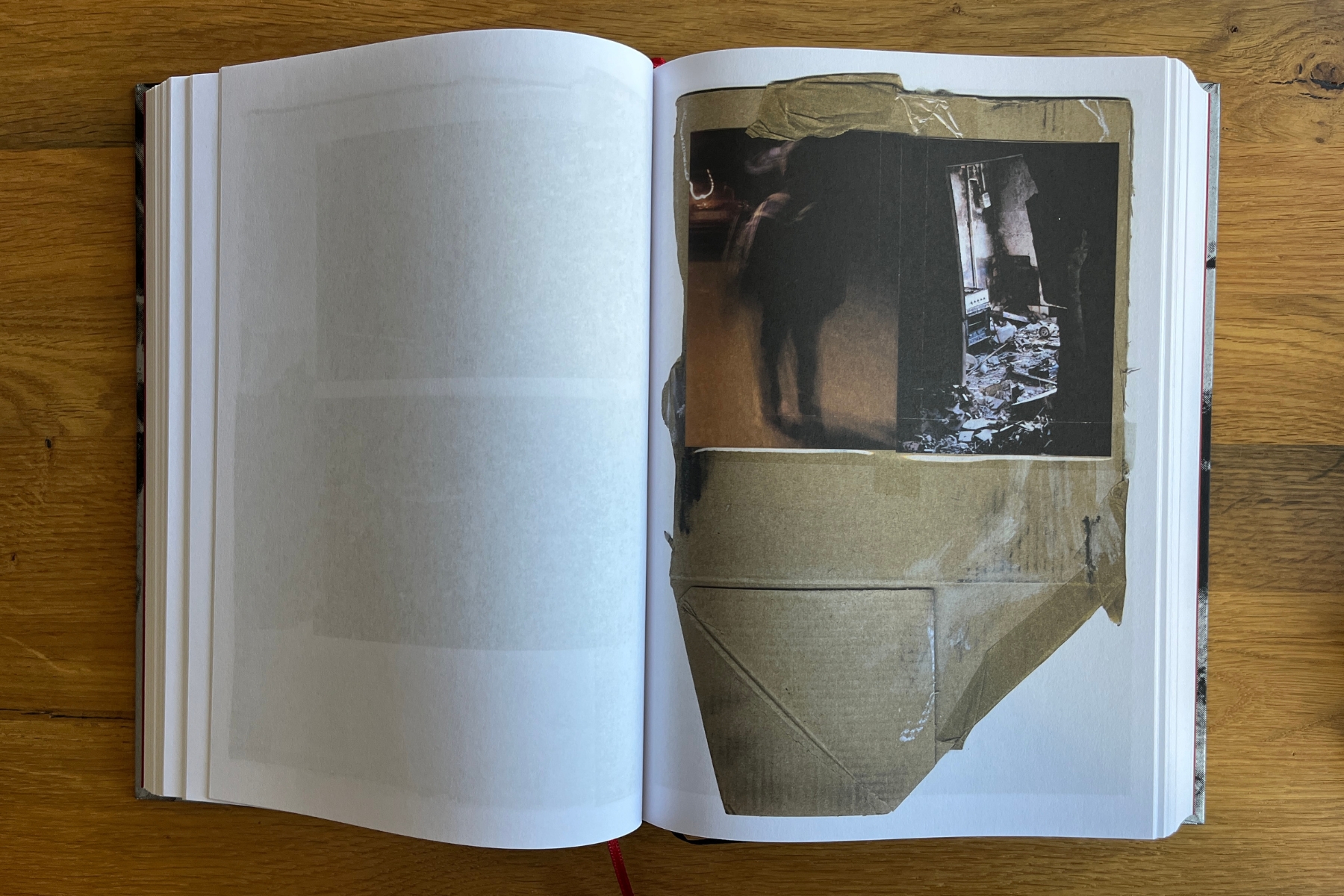
The visual register is deliberately wide and unsettling in its range. Dark, gothic references sit directly against extremely aesthetic abstract collages— careful arrangements, considered patterns. Skulls recur throughout, giving the book the quality of a sustained memento mori, connecting to a longer tradition of medieval death imagery: the danse macabre, mortality moving through ordinary life. War, it suggests, is not new. The physical materials are reclaimed and found — old packaging, rubble, objects that already had a life. Kurmaz draws on them, paints over them in translucent colour, layers his own images on top. The result is something between collage, painting and documentary photography, none of those things entirely and all of them at once. Some of the most disquieting pages are the ones showing ordinary life — people on the grass in the park, a street, a normal moment — which, placed in sequence with images of destruction, become stranger than the war pictures themselves.
Running beneath all of it is a question the book never resolves, because it cannot be: how do you live when you are constantly, and justifiably, afraid of dying? Handwritten notes and diary entries appear throughout, friends are remembered, the writing is raw and private. People are mostly anonymous; Kurmaz himself appears occasionally — present but not centred. And yet the book is entirely personal, its layers of intimacy stacked one on top of the other: the found object, the handwritten word, the private photo, the public image.